 CSOradio
 CSOtv
CSOtv
 CSOradio
Natalie Merchant, in the role of Mother Goose, encourages students to join her in the aisles of Orchestra Hall during a School Concert.
Todd Rosenberg Photography
The lights dim in Orchestra Hall, and hundreds of Chicago Public Schools students erupt in cheers before shushing one another into focused silence. They have gathered at Symphony Center for Mother Goose & the Cabinet of Wonder, an impressive arts-education collaboration between singer-songwriter Natalie Merchant, the Chicago Symphony Orchestra’s Negaunee Music Institute and Chicago Children’s Theatre. Shadow puppets by Manual Cinema appear on a screen, as Merchant and a young narrator introduce Mother Goose. In their dialogue, the two characterize Mother Goose as a very, very old poet whose spirit lives another day every time a child learns one of her rhymes. Miss Natalie, as she is known to the kids, invites the audience to open her “cabinet of wonder,” singing, “Come gather ‘round and see, you’re as welcome as can be.” For this audience of students, Cabinet of Wonder is a joyful blend of music and imagination, evident in their laughter, smiles and spirited recitation of nursery rhymes. Through my lens as a speech-language pathologist, it is a powerful teaching tool designed to harness music to stimulate early cognitive, social and emotional development.
There are numerous, well-studied benefits of teaching young children nursery rhymes. Recent research from the TMW Center for Early Learning and Public Health at the University of Chicago, in a paper titled Reimagining Mother Goose: How Nursery Rhymes Cultivate Cognitive and Emotional Skills in Young Children, indicates that nursery rhymes are essential for early brain development. The melodic rhythm, repetition and playfulness of nursery rhymes do more than entertain; they accelerate vocabulary acquisition, strengthen reading and comprehension, and nurture a child’s blossoming sense of self.

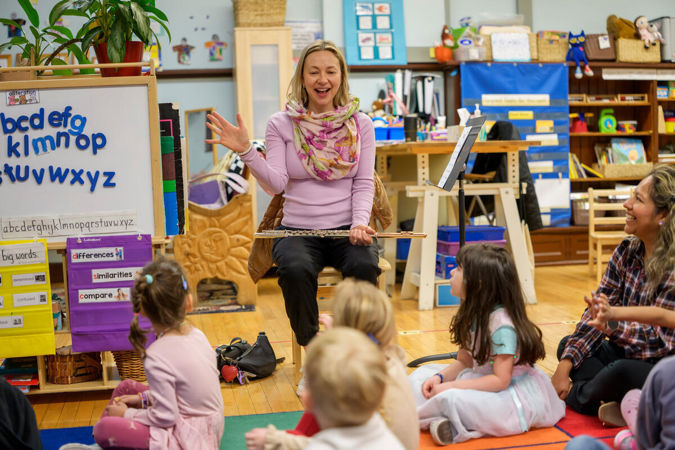
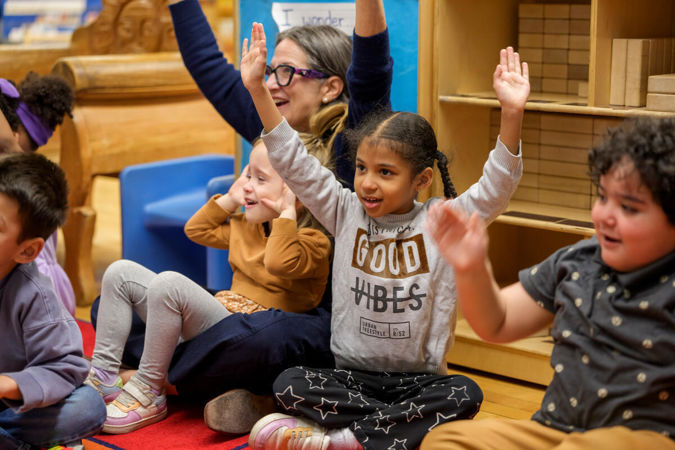
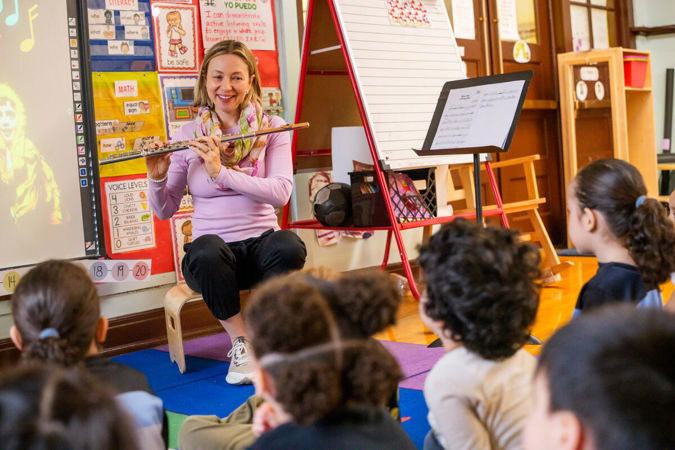
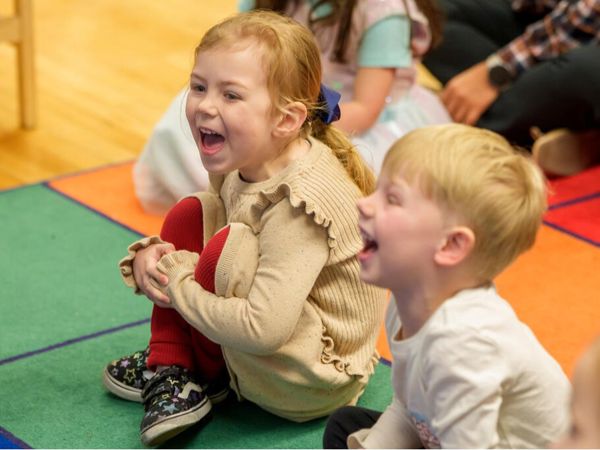
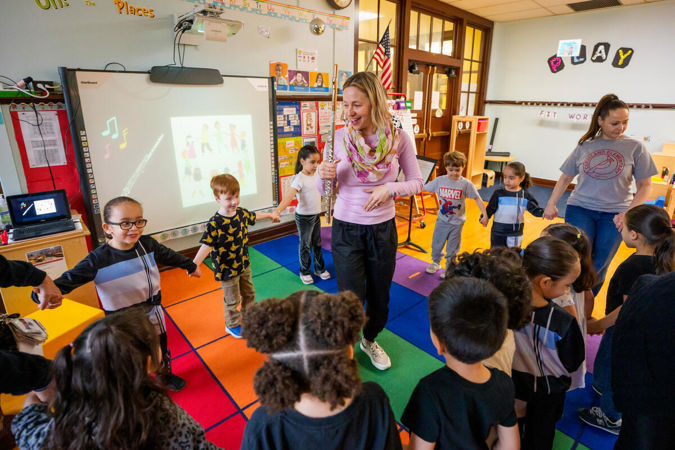
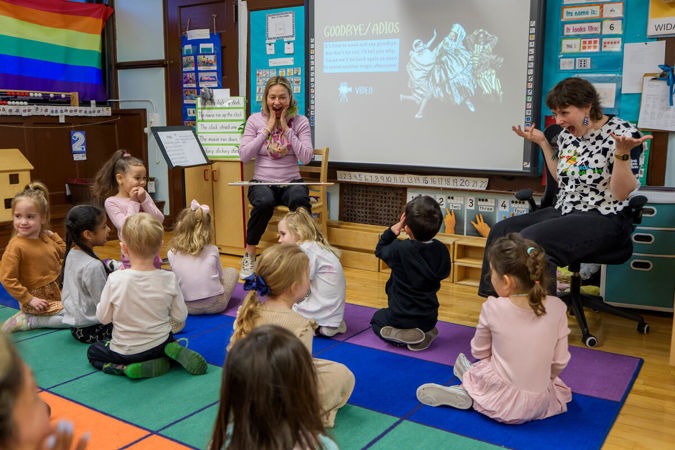
This impact is best witnessed where the curriculum first comes to life: the classroom. Leading up to the concert, 42 classrooms across 12 Chicago Pre-K public schools immersed themselves in the Cabinet of Wonder curricular tool through digital media and in-person visits. One April morning at Cleveland Elementary School, the arrival of Catherine “CC” Councell from Chicago Children’s Theatre was met with wide-eyed focus. During this second visit, Miss CC captivated her Pre-K and Kindergarten audiences by leading them on a magical journey back to the Land of Make Believe. Together, she and the students (and all the equally entranced grown-ups in the room) moved effortlessly from the opening notes of Miss Natalie’s ‘hello song’ to active rhyme interpretation and group movement.
The pinnacle of the visit was an in-depth exploration of the Mother Goose rhyme “Mary Had a Pretty Bird” with special guest, CSO flutist Emma Gerstein. The children, recognizing Emma from the Cabinet of Wonder videos, watched in awe as she used her instrument to mimic a bird’s call. Miss CC guided the group through the verses, pausing to check for comprehension.
Mary had a pretty bird / Feathers bright and yellow / Slender legs upon my word / He was a pretty fellow
“Picture a bird in your brain. What could ‘slender legs’ mean?” she posed. Embodying the text, the children flapped their arms, singing the rhyme together and fluttering in a circle around Emma and her flute. As the visit ended, the students and their teacher launched into an impromptu countdown of the “28 sleeps” until they would see Mother Goose live.
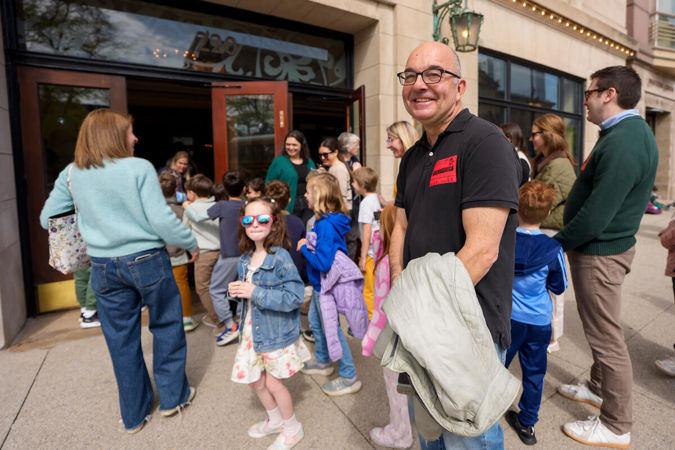
When the day of the concert arrived, excited students teemed out of school buses and into Orchestra Hall where they took their seats, eagerly anticipating Mother Goose’s appearance. This was no ordinary performance; it was the accomplishment of several years’ research, development, and thorough preparation, bringing the Cabinet of Wonder lessons to life on a world-class stage with Natalie Merchant as the guiding figure. The performance transformed from a show into a social interaction the moment Mother Goose entered the hall, shaking children’s hands and inviting them to dance.

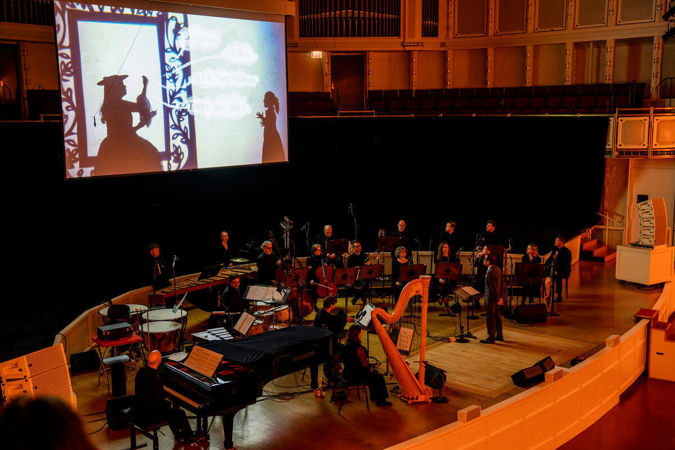
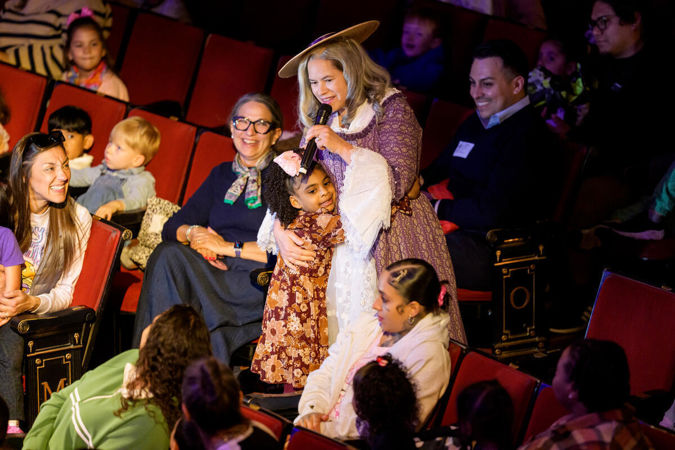

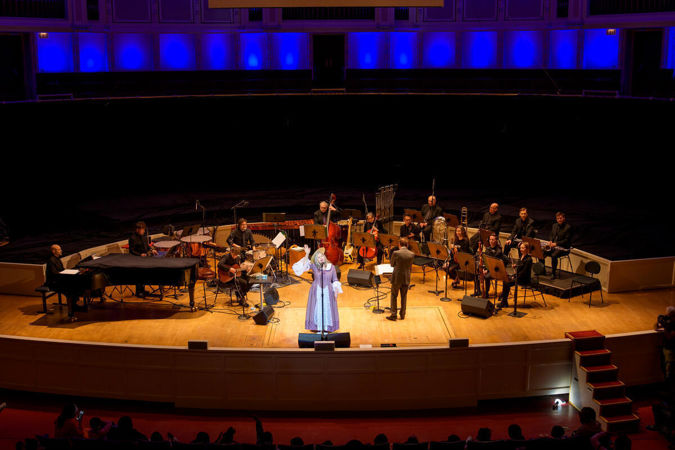
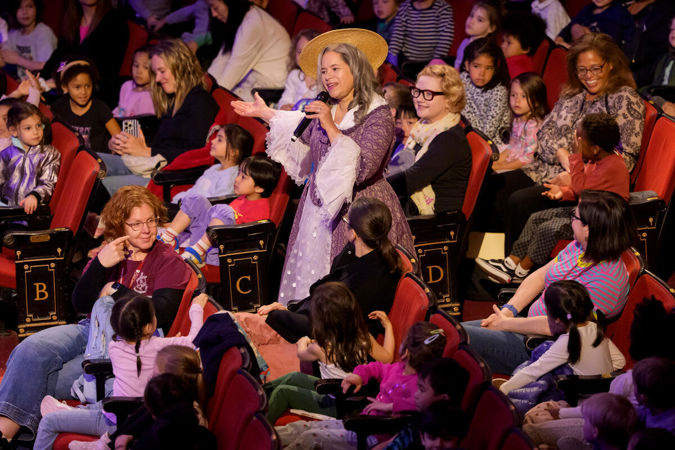
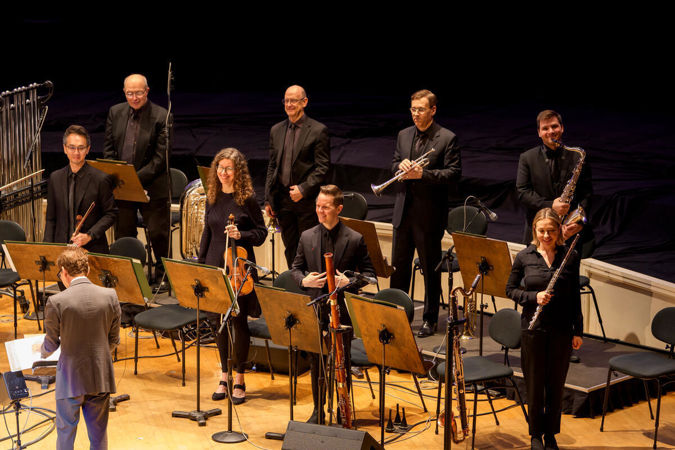
Similarly, CSO musicians and guests moved beyond their roles as performers, acting as educators through music, movement and props. One donned mouse ears and played a slide whistle to accompany the line “the mouse ran down” during “Hickory Dickory Dock,” while another led the audience in marching to “A Crooked Man,” helping children internalize the rhyme’s poetic meter. Miss Natalie even led a call-and-response jazz session for “Hey Diddle Diddle,” imitating conversational turn-taking. The program’s success was perhaps most evident during moments she shared the microphone, where students clamored to shout rhymes with fearless confidence.
Ultimately, Mother Goose & the Cabinet of Wonder demonstrates that music, movement and rhyme are fundamental to early childhood education. By weaving together rhythmic patterns and melodic storytelling, this initiative reminds me why these programs matter. They don’t just teach a song — they fine-tune the way a child’s brain processes and connects with the world around them.
The music, videos and learning resources are available to all for free at cabinetofwonder.org.


