 CSOradio
 CSOtv
CSOtv
 CSOradio
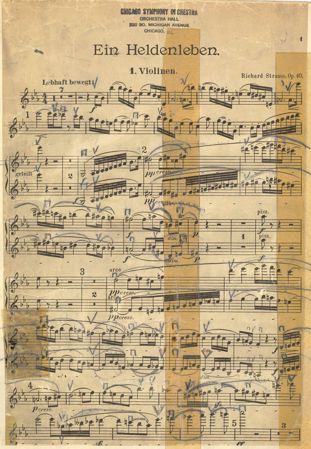
First edition of Strauss' Ein Heldenleben used by Theodore Thomas for the U.S. premiere in 1900
Theodore Thomas collection
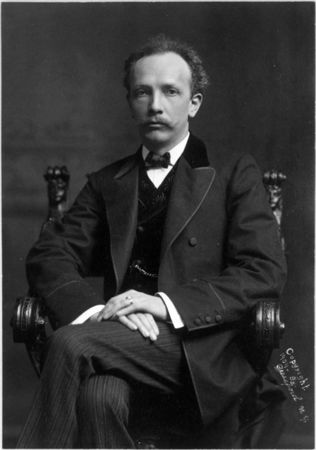
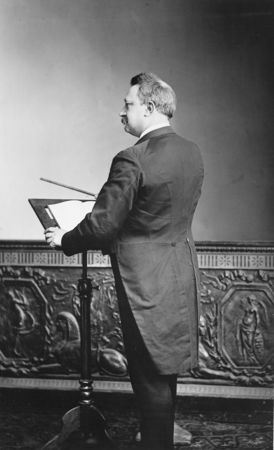
Founder and first music director Theodore Thomas led the Chicago Orchestra in the U.S. premieres of Richard Strauss’ Till Eulenspiegel’s Merry Pranks in 1895, Also sprach Zarathustra in 1897 and Don Quixote in 1899. So, soon after the composer led the first performance of his Ein Heldenleben in Frankfurt on March 3, 1899, Thomas was eager to introduce his friend’s new tone poem to Chicago audiences.
Following the first performances in Chicago on March 9 and 10, 1900 — also a U.S. premiere — the critics (mostly) agreed:
- “. . . interest centered, of course, in the new symphonic poem by Strauss, which comes heralded by the report of the sensation which it awakened abroad. So far as may be told from a first hearing, the work is destined to assume a conspicuous place in the literature of modern music, if only as a specimen of the extraordinary character of modern orchestration . . . an extraordinary brilliant feat of composition, a work surging with passion and feeling, often marked by sensuous beauty, and at times — as in the scene describing the hero’s entrance into battle, where we actually seem to hear the clash of steel upon steel — violently discordant but almost invariably strikingly apt in its attempted suggestion of the subject portrayed.” — The Chicago Record
- “All the spirit in one answers to the stimulating music, and to hear it is almost as exciting as to be in a battle. It is not too much to say that this descriptive writing is as fine as any ever given to the world. The new Strauss composition was a decided success. . . . The considerable audience of yesterday applauded it with enthusiasm. This tone poem is one of the most striking and at times startling examples of descriptive composition ever yet presented by a composer.” — The Chronicle
- “As to the performance of this mighty composition, there can be but one verdict, it was virtuoso playing of the most advanced description. The score is one of almost unparalleled difficulty, both for the individual players and for the orchestra collectively. But under Mr. Thomas’ steady and commanding baton, the whole was carried to a successful and brilliant culminations. . . . Mr. Kramer, the concertmeister, deserves especial mention for the able manner in which he performed the difficult solo passages illustrative of the hero’s ‘love’ experiences.” — Chicago Tribune
- “. . . with gorgeous colors lavishly and yet artistically laid on by a master hand, and will rank among the most popular of the modern compositions. . . . The most beautiful theme was that devoted to the love episode, largely depicted by a beautiful solo for the violin delightfully rendered by Mr. Kramer.” — Inter Ocean
However . . .
- “Another new work by Richard Strauss, the gifted though erratic composer, was introduced at yesterday’s concert . . . altogether a large composition, very large . . . it cannot be said consistently that it brings forward anything new in music, nor shows marked advance in point of technique . . . the result that, while much rich, strongly colored material is produced, there is also that which cannot legitimately be classed as music. . . . one does not expect to be treated to a musical chaos in order that an attempt may be made to impress an image upon the mind. As a matter of fact, such moments of orchestral hullabaloo as are created in this tone poem defeat the very purpose for which they are intended.” — The Chicago Herald

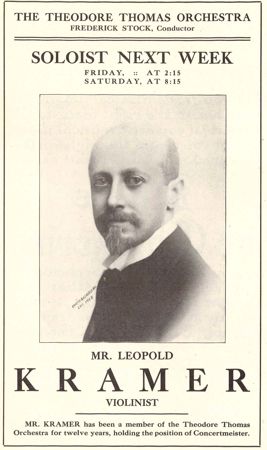
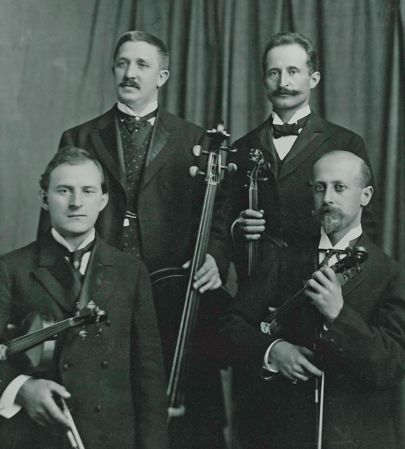
Leopold Kramer (1870–1942) was born in Mühlhausen, Bohemia, and studied under Antonín Bennewitz, director (and predecessor to Antonín Dvořák) at the conservatory in Prague. He performed in several orchestras in Hamburg, Berlin, Amsterdam and Cologne — also serving as concertmaster of the Gürzenich Orchestra and the Concertgebouw in Amsterdam — while still in his 20s. Recruited by Thomas, Kramer immigrated to the United States in 1897 to become the Chicago Orchestra’s third concertmaster, sitting in that chair for the U.S. premieres of Strauss’ Don Quixote and Ein Heldenleben.
As concertmaster, Kramer appeared as soloist with the Orchestra on several occasions, in concertos by Bach, Bruch, Lalo, Saint-Saëns, Sibelius, Sitt and Vieuxtemps, and works by Beethoven, Glazunov, Handel and Raff. He also founded the Chicago String Quartette in 1906 with fellow Orchestra members Ludwig Becker (a member of the first violin section who would later succeed Kramer as concertmaster), Franz Esser (principal viola) and Bruno Steindel (principal cello).
During and after his time in Chicago, Kramer served as concertmaster of the New York Philharmonic, Metropolitan Opera, Hamburg Municipal Opera, London’s Covent Garden and Chicago Grand Opera. Also a notable teacher, Kramer taught on the faculties of the Cosmopolitan School of Music and Dramatic Art in Chicago (later merging with Roosevelt University to become part of what is now the Chicago College of Performing Arts) and the German Academy of Music and Performing Arts in Prague, as well as New York’s Institute of Musical Art (later renamed the Juilliard School).
In a 1938 letter to fellow former CSO violinist Rudolph Mangold, Kramer wrote to his colleague, “Kindly remember me to all my old friends. I still have a warm spot in my heart for Chicago, for I spent there some of the happiest years I have ever known.”
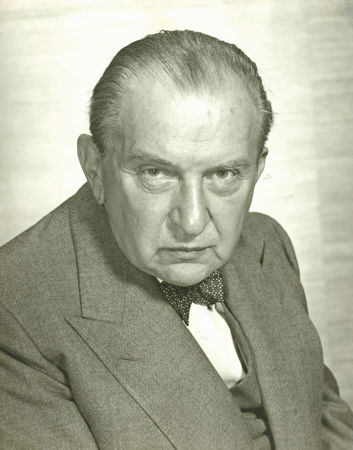
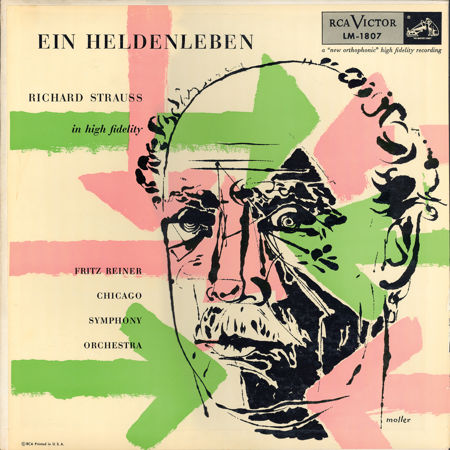
Thomas would only repeat Ein Heldenleben once during his tenure as music director, but under his successors, the work became a staple of the repertoire. Shortly after Fritz Reiner became sixth music director, he and the Orchestra recorded together for the first time, committing to disc two works by Strauss: the Dance of the Seven Veils from Salome and Ein Heldenleben for RCA on March 6, 1954.
“Reiner brought out the opulence of Strauss’ orchestration but never wallowed indulgently in the more episodic moments; instrumental textures were clarified so that transparency of sound was paramount; and climaxes were carefully prepared so that they did not appear bombastic. To successfully balance such a large orchestra while projecting seemingly spontaneous playing was a notable achievement,” wrote Kenneth Morgan in his biography Fritz Reiner: Maestro and Martinet. “Ein Heldenleben, to a critic for Harper’s Magazine [in November 1954], confirmed Reiner as probably the greatest Strauss conductor alive: ‘the razor’s edge combination of lean, hard clarity on a vast orchestral scale and perilously high tension emotionalism is exactly suited to his disciplined directing.’ ”
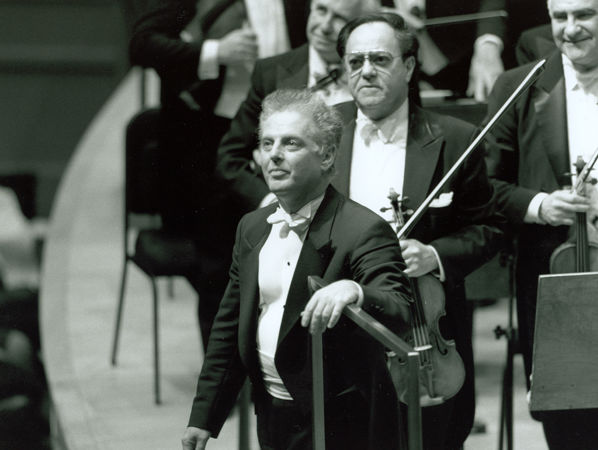
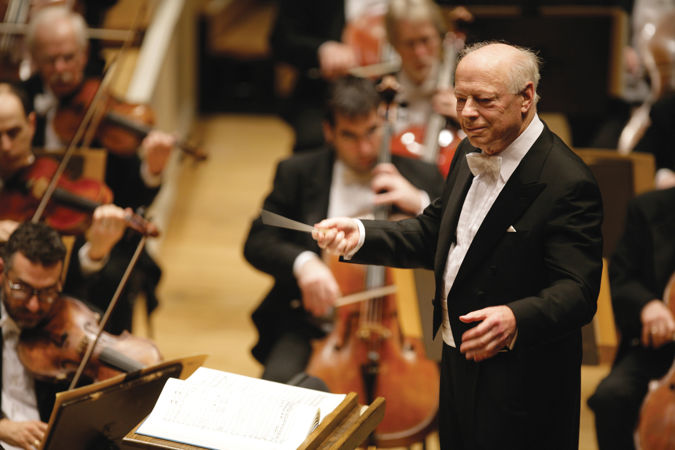
Four years later, when 15-year-old (and future ninth music director) Daniel Barenboim heard the Chicago Symphony Orchestra for the first time in October 1958 (a few days before his second piano recital appearance in Orchestra Hall), Heldenleben was on the program and Reiner was on the podium. In his autobiography A Life in Music, Barenboim later recounted that, “nothing I had heard in Europe or elsewhere had prepared me for the shock of the precision, the volume, and the intensity of the Chicago orchestra. It was like a perfect machine with a beating human heart.”
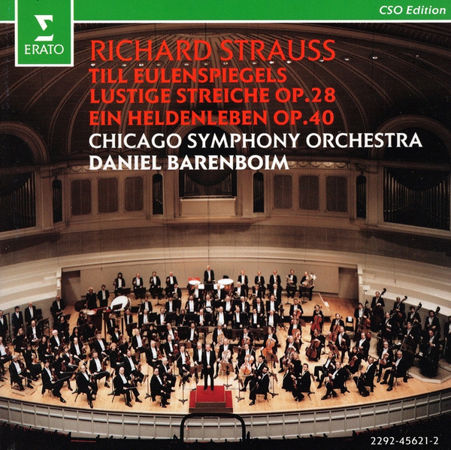
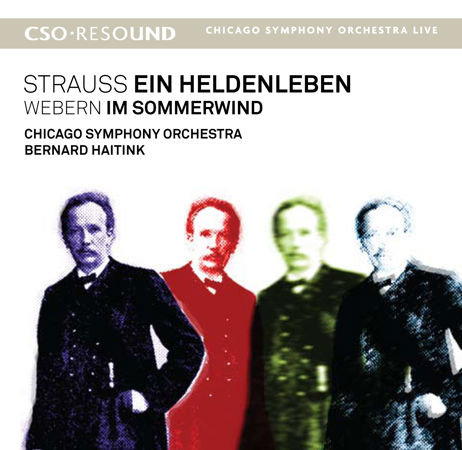
With the Orchestra, Barenboim later recorded the work for Erato in 1990, as well as Bernard Haitink in 2008 for CSO Resound.
This article also appears here, and portions previously appeared here.


