 CSOradio
 CSOtv
CSOtv
 CSOradio
Cheryl Frazes Hill
Todd Rosenberg Photography
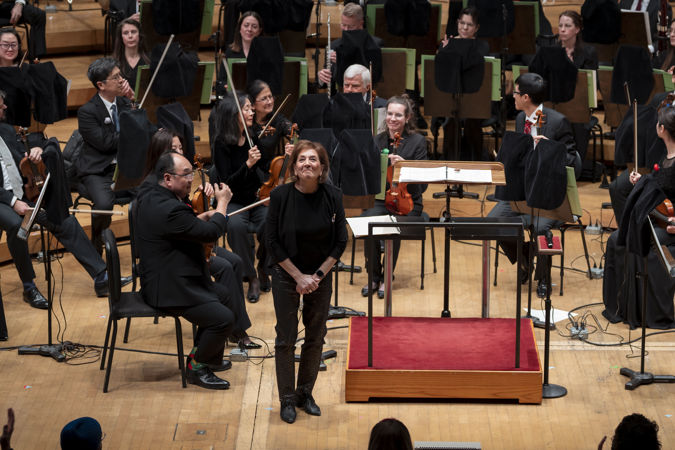
In 1976 Cheryl Frazes Hill joined the Chicago Symphony Chorus as a singer, and in 1987 she was appointed to the conducting staff by founder and first director Margaret Hillis. She assisted Hillis until her retirement in 1994, continued in that role with former director Duain Wolfe from 1994 until his retirement in 2022 and she currently works with Donald Palumbo, who became director in 2025. In 2025–26, Frazes Hill celebrates her 50th season with the Chorus.
Recently, Frazes Hill sat down with Frank Villella, the CSOA’s director of the Rosenthal Archives (and former Chorus member), for a wide-ranging conversation.
FV: When did you first hear the Chicago Symphony Orchestra/Chorus and what were your impressions?
CFH: While growing up, my parents took us to the Ravinia Festival when the CSO played, and the Chorus was often performing, which I particularly liked. During high school, I was active in the choral and theater programs. My sophomore English teacher, Richard Livingston, was a member of the Chicago Symphony Chorus and became aware of my interest, and he invited me to a Chorus rehearsal. I’ll never forget that sound and being in such close proximity of the singers. Richard was still a member when I joined, and we would often reminisce about my first visit.
Can you describe your first audition for Hillis and your first rehearsal with the Chorus?
My first audition — the summer after my junior year of college — was humbling. I requested to be considered for a paid spot, which involved a more difficult sight-singing excerpt (then from Schoenberg’s Moses und Aron). After I completed my solo, I stumbled through the excerpt. Hillis responded sternly, “When you can read this like the morning paper, come back and see us.” I returned a year later, hoping she did not remember me. Her comment then was, “Well you have certainly improved since your last audition,” and she said that I was now a member of the Chorus. That was 50 years ago.
My first rehearsal was equally humbling. It was for Ravinia’s 1976 season, and we began with the first of only two rehearsals for Beethoven’s Ninth Symphony. I had never performed the piece before, but it was clear that everyone else knew it very well. Hillis swiftly moved through her rehearsal, with rapid-fire directives for articulation, color and clarity, and I was barely keeping up. Making matters worse, I could barely hear myself because the person seated directly to my right was Isola Jones, who would soon be hired by the Metropolitan Opera. Thinking everyone had a voice like that, I was sure Hillis must have made a mistake with me!
You were in the Chorus for Mahler’s Eighth Symphony at Carnegie Hall in 1977 when Hillis replaced Sir Georg Solti on short notice. Can you describe that experience?
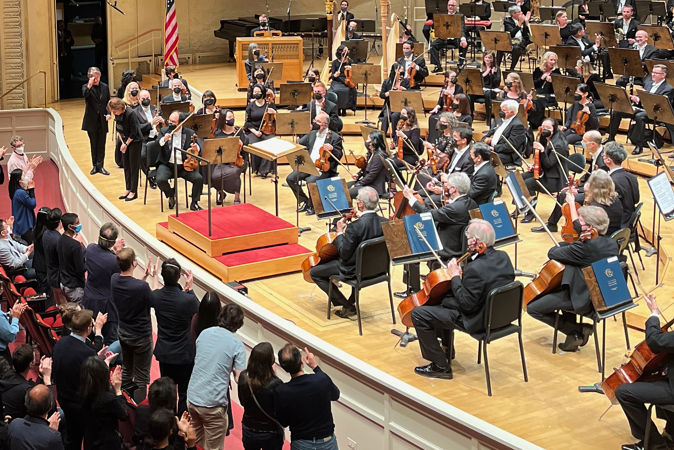
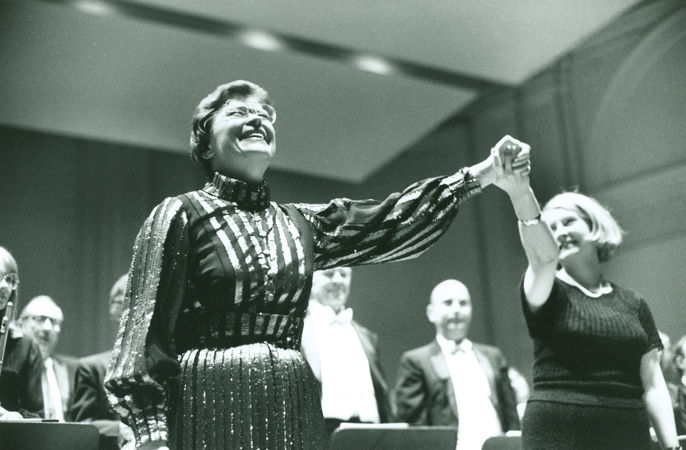
This event is one of the most vivid memories of my CSO years. When we arrived at the Hall on Saturday for the third performance, Hillis informed the Chorus that Solti had been injured in a fall and that evening’s concert was canceled. She explained that she would be ready to step in if needed in New York on Monday. Two days later at Carnegie Hall, she confirmed that she would conduct that night, without a rehearsal with the orchestra. She calmly ran us through a few difficult passages, to acclimate us to the concert hall and then we were dismissed. Her parting words to us were, “Don’t try to help me. You do your job, and I’ll do mine.”
That evening, as Carnegie Hall executive director Julius Bloom announced to the sold-out house that Solti was unable to conduct, there was a noticeable gasp from the audience. Bloom continued, saying that in Solti’s place, the director of the Chicago Symphony Chorus . . . but before he could say “Margaret Hillis,” he was interrupted by thunderous applause. Hillis was well known, as she had first established her conducting career in New York City. After a flawless performance, the audience response was immediate—a collective roar followed by boisterous cheering and a ten-minute ovation. The night belonged to Hillis and she made headline news the next day. I feel so incredibly fortunate to have been a part of this historic event.
Along with members of the CSO’s clarinet section and Chorus colleagues Kathleen Karnes-Ferrin and Wayland Rogers, you recorded Mozart’s Music for Basset Horns, and the release was nominated for a 1986 Grammy for Best Chamber Music Performance. Can you describe the experience? Did you attend the awards ceremony?
Larry Combs, John Bruce Yeh, Gregory Smith, and J. Lawrie Bloom were putting together a concert of Mozart’s clarinet works, and among the pieces were three divertimenti requiring a vocal trio. John invited me, along with Kathy and Wayland, to perform on the program. Soon after the performance, we recorded the pieces. CBS Masterworks picked up the recording and happily it was nominated for a Grammy Award. Several of us attended the ceremony in Los Angeles, and it was great fun.
In 1987 Hillis invited you to become an assistant conductor for the Chorus. Can you describe the circumstances that led to that appointment and what was it like to first lead the ensemble in rehearsal?
Hillis became familiar with my conducting after she had invited me to conduct the Chorus on her annual holiday program at Orchestra Hall. Shortly after that concert, she invited me to join the staff.
My first time rehearsing the Chorus was a “trial by fire” incident. I happened to be in the choral office at Northwestern University, where I was a student, when the phone rang. It was the CSC manager informing me that Hillis’ plans had changed and I was to lead the three-hour rehearsal for Berlioz’s Romeo and Juliet. The call came at 4:00, and the rehearsal started at 7:00.
I remember very little about what happened next, other than fast driving and the speediest rehearsal plan I have ever crafted (with no guidance from Hillis). I knew how far we had progressed in the piece, having assisted her in prior rehearsals. With the help of a home study chart that she created for every work, I tried to follow the natural progression of her rehearsal layering process and did what I thought she would focus upon next. Somehow, it all worked out fine.

In addition to Hillis, you have also worked with chorus directors Duain Wolfe and Donald Palumbo. Can you describe the differences in each of their leaderships?
It is difficult to compare leadership styles, which are greatly influenced by personality, and these three leaders have very different personalities. What is more important is what they have in common; all possess similar leadership traits that predict success for a chorus director. Each has demonstrated, throughout their impressive careers, the highest level of musicianship, a superb choral pedagogy (they hear everything and they know how to fix things), effective and concise communication skills, a charisma that motivates the ensemble, excellent time management and solid organizational skills. Beyond these abilities, each one possesses vast knowledge and experience with the great symphonic choral/orchestral masterworks, old and new. These characteristics present differently through each director’s personality, yet they all possess these important traits, which are necessary for leading a professional chorus.
Commercial recording has been a huge part of your experience with the Chorus, both as a singer and as a director. What are some of your favorite recordings on which the ensemble appears?
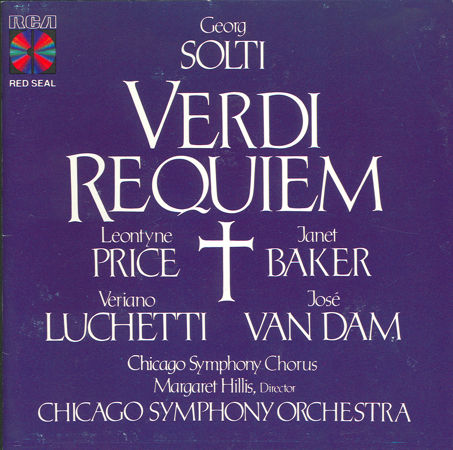
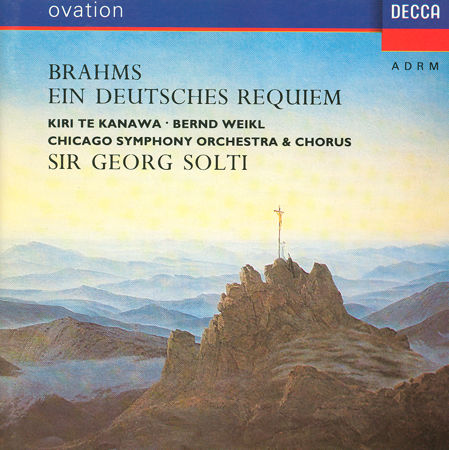
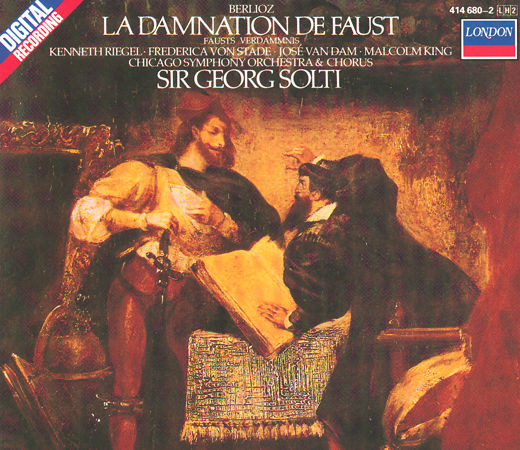
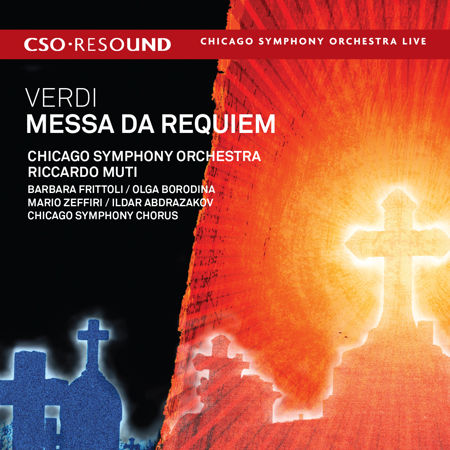
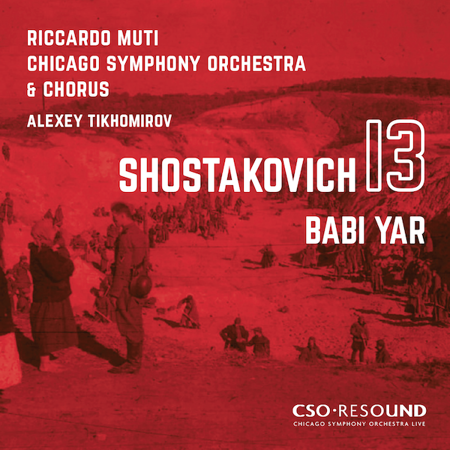
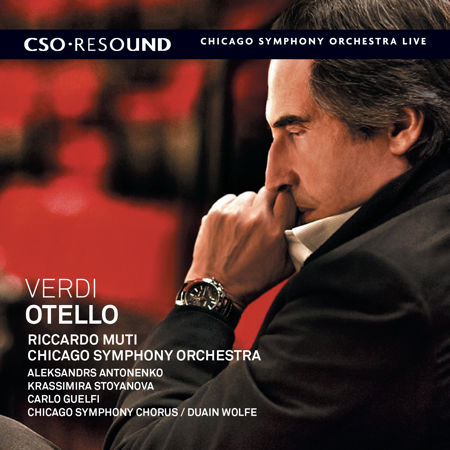
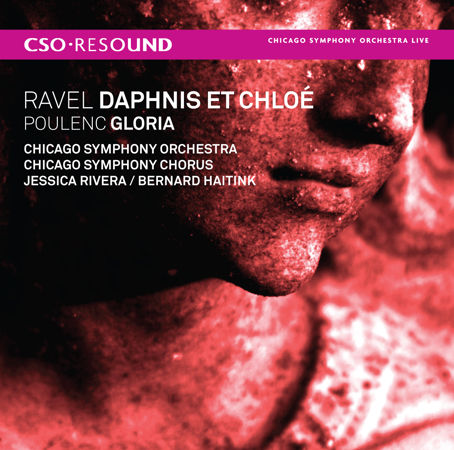
I have never counted the number of recordings I have been involved in since 1976, but there are many that I love, to be sure. For sentimental reasons, Verdi’s Requiem— my first recording with the CSO and the Chorus’ first Grammy Award for Best Choral Performance — is a favorite. What a joy to watch Leontyne Price in close proximity, particularly as she managed the repeated takes. The first version of Brahms’ A German Requiem (another Grammy for Best Choral Performance), where I first heard Kiri Te Kanawa’s spellbinding singing, was amazing. Berlioz’s The Damnation of Faust, a 1982 Grammy Award winner for Best Choral Performance, was special because it was my first experience with the piece and it became even more special when we took it to Europe for the Chorus’ first European tour. Two Grammy winners — Verdi’s Requiem and Shostakovich’s Symphony no. 13 (Babi Yar) — plus Verdi’s Otello, all under Riccardo Muti, plus Poulenc’s Gloria and Ravel’s Daphnis and Chloe with Bernard Haitink are all extraordinary recordings under Duain Wolfe’s superb preparation.
Since 2017, you have served as chorus director of the Milwaukee Symphony Chorus. How does working with this ensemble differ from or is similar to preparing the Chicago Symphony Chorus?
Chicago’s singers are professionally trained vocalist/musicians, which makes our Chorus in Chicago much more homogenous. The background of the Milwaukee chorus is more diverse in terms of musical training, which demands an approach that is not too elementary for advanced members and not too fast for those with less experience. As far as my rehearsal process is concerned, it is very similar. I have worked with so many different levels of singers in the past 50 years that I naturally adjust as needed, but I think the main way I approach rehearsals in each chorus is consistent. Both ensembles have the same responsibility: to sing at a level of precision, polish and beauty that is consistent with the orchestra. Though many of the Milwaukee singers are not paid, they are professional singers by virtue of the work they are doing. And therefore, I treat every member of Milwaukee and Chicago as professional musicians.
For 20 years, you also worked as director of choral activities for Roosevelt University’s Chicago College of Performing Arts. How did working with the CSC prepare you for that role?
Margaret Hillis and Duain Wolfe were very influential in my approach to collegiate teaching and to my work on the podiums in Chicago and in Milwaukee. The musical preparation; rehearsal techniques; conducting; organizing of materials; long-term rehearsal planning; staff management; problem solving; conflict resolution; interactions with orchestra conductors, librarians, administrators, journalists and donors; and public appearances I observed of Hillis and Wolfe have served as examples. I think, most of all, their courage in stressful situations, their tireless work ethic, and the great generosity shown to me by both of them, have been the greatest gifts. In turn, I have tried to be that example for my students — demonstrating what it means to be a professional musician and a good colleague. The education I have acquired through the years at the CSO has been as foundational to my development as my undergraduate and graduate degrees, and perhaps even greater. My mentors have ultimately shaped me as a conductor and as a teacher. And the learning continues, to this day. I am grateful for it all.
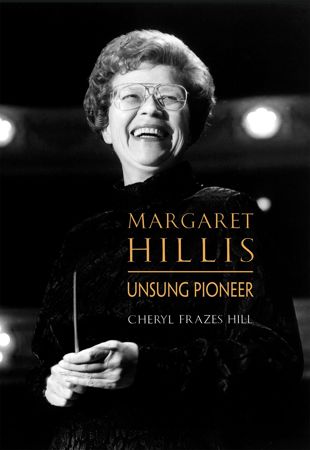
You literally wrote the book on Margaret Hillis and it was released by GIA Publications in time for her centennial a few years ago. Can you describe the process of researching and writing?
Having only written scholarly journal articles and a doctoral dissertation prior to writing the book, I did not have a planned process going into this. When you invited me to consider writing the book about Hillis, I wasn’t sure where to start. I knew her, but only to a point. She was very private and I could speak to her professional work, but the book was supposed to be about HER, and I wanted it to be more than a timeline of her accomplishments. Jim Yarbrough, a former member of the Chorus, had been working in the Rosenthal Archives to process and catalog her collection, which she donated to the CSO. I began there. Boxes and boxes of files with personal letters, legal contracts, meeting minutes, newspaper articles, concert reviews, photographs and scrapbooks, all of which gave me a very general timeline to go on. But only after many interviews with family, close friends and colleagues from her early years in New York up through her life in Chicago, did a picture begin to emerge. I researched each part of her life and did an ancestry search of her storied family over several generations. I made numerous visits to Kokomo Indiana’s Historical Society and the Elwood Haynes Museum (Hillis’s famous grandfather) and I traveled to choral conferences where some of her long-time conductor colleagues were generous in their stories about their good friend. All of this enabled me to understand who Margaret Hillis was. Her vast accomplishments were all the more impressive knowing what she overcame, as a woman ahead of her time.
After 50 seasons with the Chicago Symphony Chorus, what’s next for you?
I’m not ready to retire just yet. I finally figured out how to do this! That’s the problem with conductors — it takes a lifetime to do this work properly, and just when you feel like you have it in hand, the clock says it’s time to retire. I have a few more things I want to do accomplish before I hand in my baton, and I certainly could not have predicted how my career has evolved. To be involved in the most spectacular performances of the greatest masterworks in the finest concert halls under the direction of the most incredible conductors and all with the world’s greatest orchestra . . . this has been extremely rewarding. However, the part of this process that continues to bring me the greatest satisfaction is what we do in rehearsal week after week. Lifelong friendships in this Chorus have been formed over years of shared efforts, shared experiences and treasured memories. I am grateful for my career, conducting, teaching and writing. And I am even more grateful to have been able to do this with the support of family: two wonderful children (Carly and Mitchell) and my extremely supportive husband (Gary). I am truly thankful.


