CSOradio
 CSOtv
CSOtv
 CSOradio
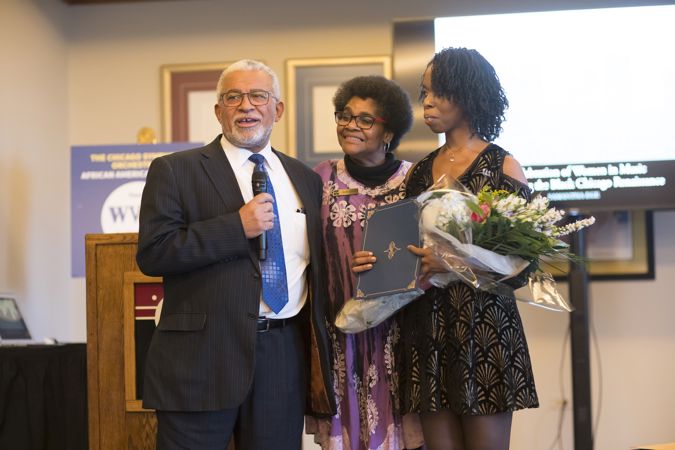
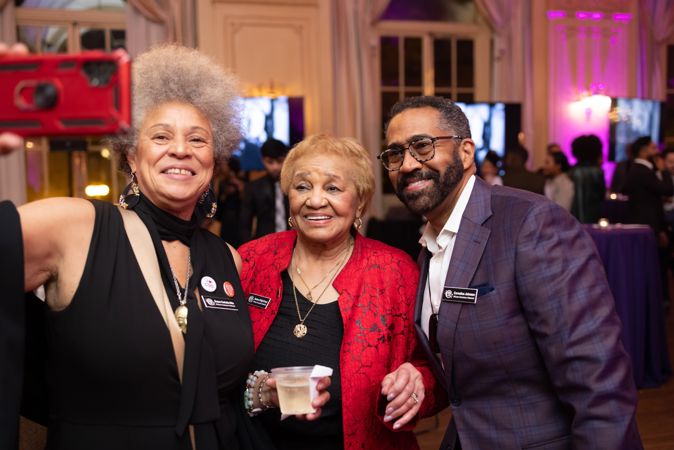
Barbara Wright-Pryor (left) and Sheila Anne Dawson Jones, founder of the African American Network, meet during intermission of a CSO concert in March 2018.
Todd Rosenberg Photography
The Chicago Symphony Orchestra Association’s African American Network stands as a model for programs at symphony orchestras across the United States aimed at redressing racial imbalances, both offstage and on, by fostering greater audience engagement and more diverse representation.
As we raise a toast to the Network’s 10th anniversary this season, it’s the ideal opportunity to take a closer look at how the liaison and volunteer group (which currently consists of 1,800 active members) came into being, what its mission is and why it has proved to be so successful.
The central objectives of the AAN are to celebrate Black excellence across genres, including classical music, jazz and new music; deepen connections with current audiences; and cultivate potentially fruitful relationships with new audiences.
Those objectives largely coincide with the mission of the AAN’s forerunner, the CSO Community Advisory Council, explained Barbara Wright-Pryor, a longtime Chicago concertgoer and a prominent voice on the CSO’s Artistic Planning Committee. She served on the advisory council before becoming a founding member of the African American Network.
“The motivating idea was that when [Black and brown] people know they will hear something appealing in the concerts, they will come — and if you make the programs more diverse, you will get a more diverse audience,” Wright-Pryor said.
Founded in 2000 during the tenure of former CSOA President Henry Fogel, the CSO Community Advisory Council of some 20 local cultural and civic leaders set out to realize a fourfold mission, according to Wright-Pryor:
-
To increase the performance of music by Black composers by the CSO at Symphony Center and beyond;
-
To increase performances by Black artists and Black conductors;
-
To increase Black audience attendance at concerts and events at Symphony Center and beyond by offering specially priced tickets to selected concerts; and
-
To support the CSO and its programs at Symphony Center and beyond.
While the CSO Community Advisory Council made modest gains, it was clear to many that the effort needed a dynamic, visionary leader to make a more decisive impact. It found such a leader in Wright-Pryor’s decades-long friend and fellow singer, Sheila Anne Dawson Jones.
Both women had been alto soloists in Chicago performances of Handel’s Messiah. A former choir conductor and string teacher in Milwaukee, Dawson Jones had long been a tireless champion of music by Black composers in CSO programming and activities offered at Symphony Center and in Chicago-area neighborhoods.
Dawson Jones was serving in the CSOA’s Ticketing and Patron Services department in spring 2016 when the AAN was created; two years later she became the CSOA’s director of community stewardship, which included work with the AAN and other community organizations.
All of this might not have happened were it not for the longtime commitment to diversity of CSO Music Director Emeritus for Life Riccardo Muti.
Knowing that Dawson Jones and Wright-Pryor were as passionate as he about the need for greater minority representation at Symphony Center events, he invited them to meet over dinner in September 2015 to discuss how to turn their passion into action.
At the end of what Wright-Pryor recalled as “a very gung-ho meeting,” Muti rose from his seat and declared, “Let’s do it!” Dawson Jones came up with a name for the new audience development group and Muti offered his imprimatur.
And that was how the CSOA’s African American Network came into being.
Dawson Jones, as director, appointed Wright-Pryor as historian-archivist and Chicago composer and conductor Renée Baker as musician-consultant.
Dawson Jones wasted no time establishing an annual series of programs to create connections and conversations through music and around a central mission— to serve and encourage individuals, families, educators, students, musicians, composers and businesses to discover and share in the experience of live music.
Her personal warmth, charisma and energy went far toward cultivating new patrons and rededicating existing audience members and supporters in the Chicago metropolitan community and beyond.
Dawson Jones also helped to bring new voices into the network. The board has grown from the original 10 members to the current 20, all sharing a common goal of bringing performers and public together in ways that demolish real and/or perceived sociocultural barriers to the enjoyment of music.
Shortly following returning to her role in 2021 after the previous year’s COVID-19 shutdown, Dawson Jones retired from the CSOA and the AAN, for health reasons.
Her legacy is nothing if not impressive — witness the many milestones in the history of the African American Network over the last 10 years.
Highlights include annual Black History Month events, anchored by world-premiere presentations honoring major African American artists such as Josephine Baker and James Baldwin, and featuring new scores by Renée Baker; a multimedia event with the South African Consulate in Chicago celebrating the Nelson Mandela centennial; a recital and lecture by musicologist Samantha Ege on Chicago composers Florence Price and Margaret Bonds; and performances of composer-singer Cynthia Clarey’s “Bridge Over Muddied Waters.”
Like all organizations deeply involved with the shifting sociocultural fabric of their places of origin, the AAN has evolved in how it implements the various elements of its mission.
Alyssa Greenberg, CSOA audience engagement manager since March 2023 is committed to developing the objectives as the AAN begins its second decade, she said. Recognizing and building on the signal achievements of the Network’s initial decade is, in fact, vital to its moving forward.
Greenberg said she is proud of strides taken in recent years toward making Black audience members, composers and musicians a more integral part of the Chicago Symphony Orchestra Association. And she anticipates even greater strides ahead.
“It has been transformative to see how the AAN has created a space where artists and audiences cross-pollinate, connect and inspire one another,” she said.
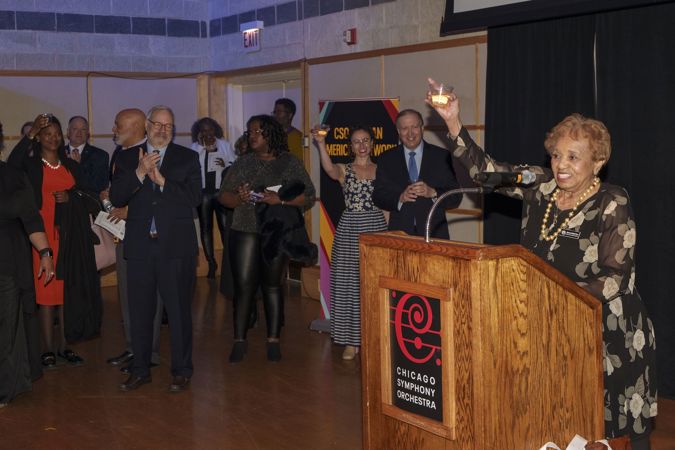
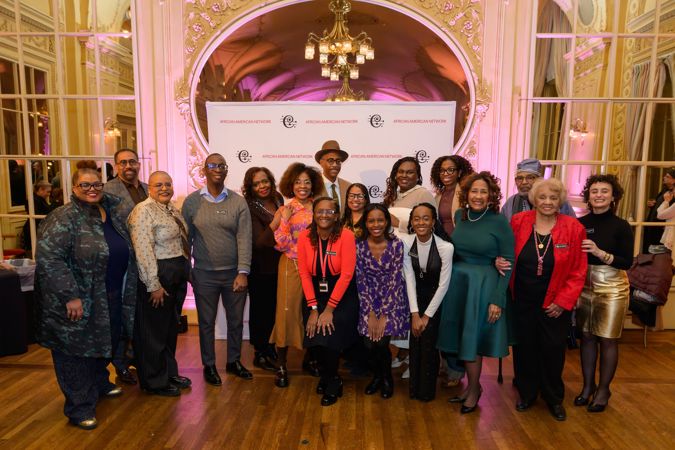
“Transformative” is no exaggeration when you witness the spirited conversations and general conviviality that mark the networking events and artist meet-and-greet receptions held alongside selected concerts at Symphony Center.
These receptions have become so packed with concert attendees, in fact, that separate reception tickets are now required for audience members attending AAN-curated lineup of concerts; admission to AAN events is free to ticket holders upon request.
Speaking of which, last season more than 900 tickets to those concerts were purchased through AAN promotional codes — the highest ticket sales in the Network’s history, according to Greenberg. Nearly 40 percent of those tickets were bought by first-time concertgoers, she said.
Looking ahead, Greenberg said the AAN will continue “to cultivate a strong sense of welcome and belonging at Symphony Center, while developing relationships with artists and community organizations in Chicago and beyond.”
Of course there is always room for growth, in the audience as well as within the ranks of the orchestra. To date there is only one African American musician in the Chicago Symphony — Tage Larsen, who joined the orchestra’s trumpet section in 2002.
But with a committed new music director, Klaus Mäkelä, leading the Chicago Symphony Orchestra into a brave new era as of 2027-28, and the African American Network building on its signal achievements over the past decade, a strong foundation has been laid for further expansion, further achievements.
Will the musical public at Symphony Center become, over the next 10 years, truly as racially diverse as the city of Chicago itself? Now that the AAN has become a vital, nationally recognized force for progress, that lofty goal appears to be within reach.
Remaining concerts, with postconcert receptions, in the network’s 10th season, 2025-26, include Mike Reed’s Chicago Inspirations, May 1, and a CSO subscription program with conductor James Gaffigan, piano soloist Jean-Yves Thibaudet and Chicago’s Apostolic Church of God Sanctuary Choir, June 13.
Note: The CSO’s concert on June 13 will be followed by a celebration in Grainger Ballroom of the AAN’s 10th anniversary. More details to be announced soon.
Additional concerts and events this season include Nubya Garcia/Somi, March 13; IMPACT: Showcasing CSO Education and Community Programs, March 15; Miles Davis @ 100 with Gonzalo Rubalcaba, March 27; Marin Alsop conducting the CSO with the Jazz at Lincoln Center Orchestra in Wynton Marsalis’ Liberty (Symphony No. 5), June 4-6, and a CSO program with Duke Ellington’s Harlem, June 18-21.